Poker Dealer School: Training Routes and Cost
Four ways to learn, and what moves the price of each.
Choosing a SchoolThere are four common ways to learn to deal poker. They differ in price, pace and how directly they lead to a job, so the right choice depends on where you live and how you learn best.
The Four Training Routes
| Route | How it works | Good for |
|---|---|---|
| Private dealer school | A dedicated school with practice tables, instructors and set class schedules. Often offers several games. | People who want structured, hands-on teaching and audition practice. |
| Community college | Some colleges in gaming markets run dealer courses through continuing or workforce education. | Learners who like a college setting and published course outlines. |
| Casino in-house program | A casino or card room trains people it plans to hire, sometimes at no charge to the trainee. | People near a casino that is hiring, especially when a room is opening. |
| Online course | Video lessons, rule modules and quizzes; some review videos of your dealing. | Learning rules and pot math, or refreshing skills before an audition. |
Poker Dealer School Cost: What Drives It
We don’t publish prices because they change and vary by city. Ask every school for a written total and compare these points:
- Tuition and whether it covers one game or several.
- Hours of instruction versus hours of supervised open practice.
- Materials: chips, cards and a felt layout for home practice.
- Registration or exam fees charged by the school itself.
- Placement help, audition prep and whether you can return to practice later.
- Refund policy if you withdraw or cannot finish.
Separate from tuition, your state may charge for the gaming license or registration and the background check. Those amounts are set by the regulator; check its website rather than relying on a school’s estimate.
What a Typical Course Covers
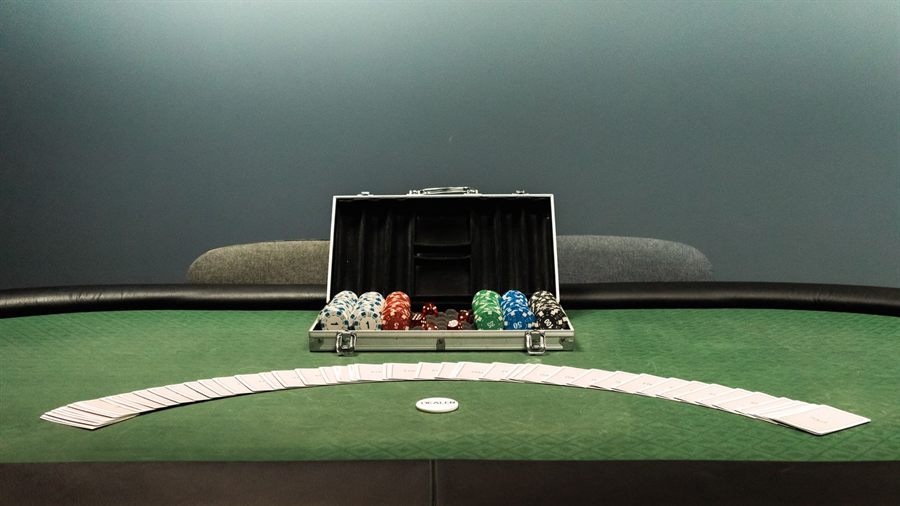
- Table layout, seat numbering and dealer position.
- Shuffle procedure, pitching and chip handling drills.
- Rules and betting structure for hold’em, then other games if offered.
- Pot, side-pot and rake procedures.
- Game protection and how to call the floor.
- Mock games with classmates, then mock auditions.
Good programs give you lots of time dealing to live players, because pace and composure only develop when people are actually betting in front of you.
Online Poker Dealer School and Certification
Searches for an online poker dealer school and online poker dealer certification have grown, and online courses do have a place. They are convenient for rules, terminology, procedures and pot math, and some let you upload video of your dealing for feedback. Their limit is that hand skills and table control are physical, and auditions are live. If you go online, budget for a practice set and plan to deal real games for friends. Treat any online “certification” as proof of a course, not as a license; only your state regulator issues the credential that lets you work.
Frequently Asked Questions
Is an online poker dealer school enough?
Online courses are useful for rules, procedures, terminology and pot math, and some include video feedback on your hands. Most employers still expect you to show real hand skills at a live audition, so plan to practice with physical cards and chips whichever course you choose.
Will a casino pay for my training?
Some do, especially when a new poker room opens or a casino is short of dealers. These programs usually come with conditions, such as working for that casino afterward. Check the job pages of casinos and card rooms near you before you pay for a course.
What is a poker dealer certification worth?
A school certificate shows that you completed a course. It is not a government license. The legal credential to deal comes from your state’s gaming regulator, usually after an employer offers you a job.
Next: Licensing and the Audition
Training is only half of it. See how state gaming licenses work and what casinos ask you to do when you audition.
Licensing and Auditions